
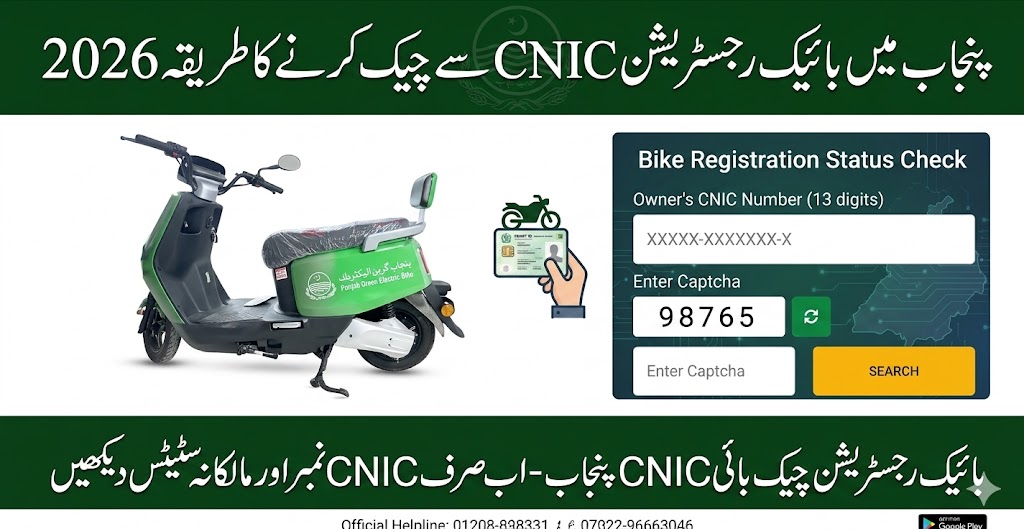
If you own a bike in Punjab or you’re planning to buy one, there’s a good chance you’ve wondered how to check bike registration using your CNIC. It’s a pretty common question, especially when people want to verify ownership, avoid fraud, or just make sure everything is properly registered.
The good thing is, the process is no longer complicated like it used to be. You don’t need to stand in long lines or visit offices unless absolutely necessary. Most of it can be done online or through simple methods.
Let’s go through it step by step in a way that actually makes sense.
What Does Bike Registration Check by CNIC Mean?
Why Would You Need to Check Bike Registration?
People usually search for this for a few practical reasons.
One of the most common situations is when someone is buying a used bike. You want to be sure the seller is the actual owner and not just someone trying to flip a vehicle without proper transfer.
Another reason is personal tracking. Sometimes people just want to know how many vehicles are registered on their CNIC, especially if they’ve sold bikes in the past but never completed the transfer process properly.
It can also help in avoiding legal trouble. If a bike is still registered under your name and gets involved in an issue, it can create unnecessary complications.
Can You Check Bike Registration by CNIC in Punjab?
Here’s where things need to be clear.
In Punjab, you generally cannot publicly check complete vehicle details using only a CNIC number due to privacy concerns. The system doesn’t allow open access to someone’s personal vehicle data through CNIC.
However, there are still ways to verify bike registration details using:
- Vehicle registration number
- Official online portals
- SMS services
And in some cases, limited information may be available if you go through proper legal or official channels.
How to Check Bike Registration in Punjab
Even though CNIC-based public lookup is limited, you can still verify bike registration easily.
1. Online Excise Punjab Website
The most reliable method is through the official Excise and Taxation website.
Steps:
- Go to the official Punjab Excise website
- Find the “Vehicle Verification” section
- Enter your bike’s registration number
- Submit the form
You’ll get details like:
- Owner name (partial for privacy)
- Vehicle type
- Engine number (masked)
- Registration status
This is the safest and most accurate method.
2. SMS Verification Method
Punjab also offers a simple SMS service.
Steps:
- Type your bike registration number
- Send it to the official verification code (usually 8785)
- Wait for the reply
You’ll receive basic registration details on your phone.
This method is useful if you don’t have internet access.
3. Visit Excise Office (If Needed)
If you need full details or have a specific issue, visiting the Excise office is still an option.
You may need:
- Original CNIC
- Bike documents
- Proof of ownership
This is usually required for legal matters or ownership transfer issues.
Important Things to Check Before Buying a Used Bike
If you’re using registration verification before buying a bike, don’t just stop at checking basic info.
Here are a few things you should confirm:
- The seller’s CNIC matches the registration record
- The bike is not stolen
- All documents are original
- Token tax is paid
- Transfer process is clear
Skipping these checks can cause problems later.
Common Issues People FaceEven though the system is easier now, people still run into a few issues.
For example:
- Wrong registration number entered
- Delayed database updates
- Mismatch in ownership records
- Old data not updated after sale
If something doesn’t match, it’s better to double-check instead of ignoring it.
Tips to Stay Safe
Here are a few simple things that can save you from trouble:
- Always verify before buying any bike
- Never trust verbal claims without proof
- Complete ownership transfer immediately after purchase
- Keep copies of all documents
- Use official platforms only
These small steps make a big difference.
Is the System Improving?
Yes, slowly.
Punjab’s Excise system has become more digital over the years. Online verification, SMS services, and centralized databases have made things much easier than before.
While CNIC-based full access is still restricted (mainly for privacy reasons), the available tools are enough for most people to verify basic details safely.
Future Expectations
In the coming years, we can expect even more improvements, like:
- Better online dashboards
- Mobile apps for verification
- Faster ownership transfer systems
- More transparency in vehicle records
The goal is to make everything quicker and more secure.
Final Thoughts
Checking bike registration in Punjab is no longer a complicated process. Even though you can’t fully search using just a CNIC due to privacy rules, there are still reliable ways to verify a bike’s registration.
Whether you’re buying a used bike or just checking your own records, taking a few minutes to verify details can save you from a lot of problems later.
In the end, it’s always better to be safe than sorry — especially when it comes to ownership and legal matters.